

Get to Know the Economic Development Alliance of Skagit County
Welcome to Skagit County!
Here are some Frequently Asked Questions about the economic ecosystem of our area, ranging from general inquiries about who we are and the support we offer to businesses that are looking to open, grow, and expand in one of the most strategically located counties in the Pacific Northwest.
For more detailed information, please contact us at 360-336-6114 or office@skagit.org.
Incentives
Skagit County Incentives
Streamlined Permitting
Skagit County can offer streamlined permitting for facilities located in unincorporated county areas, depending on the nature of the project. For more information, contact EDASC or Skagit County Planning and Development Services.
Infrastructure Improvement
Skagit County has access to economic development grants of up to $500,000 per project that can be used to support road, infrastructure, and site/building improvements, among other types of projects that support a public economic development benefit. This couples with state-level grant and funding opportunities for infrastructure through the Community Economic Revitalization Board (CERB) and similar initiatives. For more information, contact EDASC.
Opportunity Zones
Skagit County features federally designated Opportunity Zones in Mount Vernon, Anacortes, and Sedro-Woolley. Visit our Opportunity Zones page to learn more about this investment incentive and related opportunities.
Value-Added Agriculture Innovation Partnership Zone (IPZ)
For value-added agriculture products, the IPZ, which is centered around the Port of Skagit’s airport and business park facilities, has emerged as a center for innovative value-added agriculture research and production within Washington State. Close proximity to these facilities will support agriculture processing and other value-added agriculture businesses in partnering with and utilizing these assets to scale up their activities. Learn More
Veterans
Employers hiring veterans may be eligible for special tax credits and incentives. More information is available through the U.S. Department of Veterans Affairs Veterans Opportunity to Work web portal.
Washington State Tax Exemptions and Incentives
Washington state offers a diverse range of competitive tax incentives for businesses, many of which are tailored to specific industry sectors. Examples include:
Aerospace Firms Incentives
- Credit against the B&O Tax for preproduction development expenditures.
- Credit against the B&O Tax for property/leasehold taxes paid on aerospace manufacturing facilities.
- Sales & Use Tax exemption for computer hardware/software and peripherals.
- All manufacturing equipment is exempt from Sales Tax
Renewable Energy/Green Incentives
- Property and leasehold excise tax exemption for owners and operators of anaerobic digesters
- Sales & Use Tax deferral program for clean energy investment projects
- Manufacturers of solar energy systems/components can take advantage of a reduced B&O Tax rate. Additionally, installed equipment for the generation of alternative energy is exempt from the Sales Tax.
Agriculture & Food Processing Incentives
- B&O Tax exemption/deduction for manufacturers of fresh fruits and vegetables
- B&O Tax exemption/deduction for manufacturers of seafood
- B&O Tax exemption/deduction for manufacturers of dairy products.
Workforce Training
The Job Skills Program is a competitive grant that offers customized training through the community college system with 50% cost share by the state. The Customized Employment Training Program provides participating businesses a B&O tax credit for 50% of their payment to the training program.
Businesses in Skagit County enjoy the following state tax exemptions, in addition to sector and project-specific incentives:
B&O Credit for New Employees in Manufacturing and Research & Development in Rural Counties
- Available to: Manufacturers, R&D laboratories, and commercial testing facilities located in rural counties or within a Community Empowerment Zone (CEZ).
- Qualifying Activity: Creating new employment positions/increase in-state employment by 15%.
- Credit Amount: $2,000 credit/position with annual wages/benefits of $40,000 or less; or
- $4,000 credit/position with wages/benefits of more than $40,000 annually.
Machinery and Equipment Sales & Use Tax Exemption
- Available To: Manufacturers and processors for hire performing manufacturing and R&D. Testing operation for a manufacturer and processor for hire.
- Qualifying Activity: Purchase of qualifying machinery and equipment used directly in a manufacturing operation or research and development performed by a manufacturer, or testing operations performed for a manufacturer.
- Savings Rate: 8.5%
Opportunity Zones
Opportunity Zones are an economic development tool designed to spur economic development and job creation in distressed communities by providing tax benefits to investors. Localities qualify as Opportunity Zones if they have been nominated for that designation by the state and that nomination has been certified by the Secretary of the U.S. Treasury via his delegation authority to the Internal Revenue Service.
In an Opportunity Zone, investors can defer tax on any prior gains until the earlier of the date on which an investment is sold or exchanged, or December 31, 2026, so long as the gain is reinvested in a Qualified Opportunity Fund. Second, if the investor holds the investment in the Opportunity Fund for at least ten years, the investor would be eligible for an increase in basis equal to the fair market value of the investment on the date that the investment is sold or exchanged.
Washington Governor Jay Inslee has designated five census tracts Skagit County cities as Opportunity Zones:
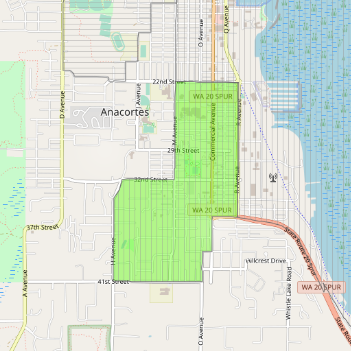 Anacortes: The Opportunity Zone in Anacortes, nominated by the Samish Indian Nation, incorporates much of southern Commercial Avenue and the neighborhoods north of Mt. Erie Elementary School. This area includes a mix of residential neighborhoods, Island Hospital, and commercial establishments, as well as the Samish Indian Nation’s tribal headquarters. The Samish Indian Nation, City of Anacortes, and EDASC hope that the Opportunity Zone designation will bring more affordable housing options for low-income residents, as well as new commercial opportunities. The selection of this tract will compliment Samish community and economic development efforts
“The Samish Indian Nation is excited for the possible private-sector investment opportunities that this designation will open up within our community. With limited space and the restrictions of living on an island, this designation will help create incentives to help our region. We are thankful and excited to be a part of this opportunity and to support the community we live in.” -- Chairman Tom Wooten, Samish Indian Nation
“This is an incentive to help attract investment to Anacortes, and we appreciate the Samish Nation identifying this tract to be an opportunity zone.” -- Mayor Laurie Gere, City of Anacortes
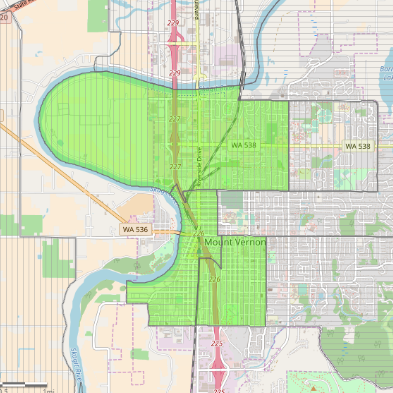
Mount Vernon: Downtown Mount Vernon and the western end of College Way make up three census tracts designated as Opportunity Zones. These incorporate most of Mount Vernon’s commercial area including the historic downtown, as well as part of Skagit Valley Hospital.
“These new zone designations, coupled with the relief provided by our floodwall project, have Mount Vernon poised for some very exciting growth opportunities. We are already seeing increased interest from investors.” -- Mayor Jill Boudreau, City of Mount Vernon
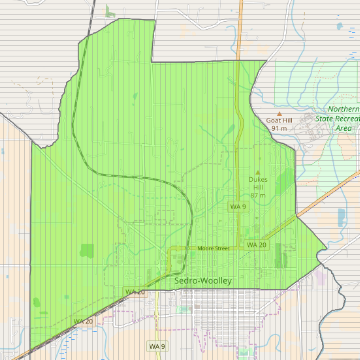 Sedro-Woolley: This zone includes much of the commercial and industrial areas of Sedro-Woolley, as well as areas that would benefit from further development of affordable housing.
Sedro-Woolley Mayor Julia Johnson characterized the Opportunity Zone designation as “an incentive to provide our community the ability to pursue with flexibility the best possible mix of investments in business, infrastructure, housing, and more.”
EDASC welcomes inquiries from potential investors interested in learning more about Skagit County’s Opportunity Zones. The Washington State Department of Commerce will share technical guidelines and advice from the Internal Revenue Service as they become available.
Information Resources on Opportunity Zones
- Washington State Department of Commerce - Opportunity Zones Information
- U.S. Treasury Department - Opportunity Zone Frequently Asked Questions
- CDFA Opportunity Zones Resource Page
- NDC Opportunity Zones Presentation and Frequently Asked Questions
*Note: All maps above are screen captures taken from the Washington State Department of Commerce’s website
State Trade Expansion Program
State Trade Expansion Program
The Washington State Department of Commerce State Trade Expansion Program (STEP), also called the export voucher program, awards cash reimbursements for small businesses to help offset expenses of expanding international sales. Eligible reimbursement grants include expenses for trade show and trade mission fees, airfare, interpreter and translation services, export training and more. Click here for more information.
Financing
Industrial Revenue Bonds
The Washington Economic Development Finance Authority (WEDFA) can issue taxable non-recourse economic development bonds, a form of financing similar to tax-exempt industrial revenue bonds. WEDFA has the authority to issue non-recourse economic development bonds on both a taxable and tax-exempt basis in support of qualifying projects — manufacturing and processing facilities and projects categorized as "exempt facilities" under federal tax law. These may include wastewater, solid waste disposal, mass commuting, and some types of recycling and cogeneration projects. WEDFA cannot assist retail projects. For more information, click here.
SBA 504 Loan Program
The Northwest Business Development Association (NWBDA) provides long-term small business loans at low, fixed rates to help develop job creation and economical growth. As a licensed Certified Development Company (CDC) by the U.S. Small Business Administration (SBA), NWBDA is able to administer small business loans through the SBA 504 programs. Learn more and apply for a loan here.
Community Development Loan Fund
The Heritage Bank Community Development Enterprise finances businesses in economicallystressed areas, breathing new life into neglected and underserved low income communities. Heritage Bank formed its own Community Development Entity (CDE) to expand the financing we bring to businesses in low-income communities in Washington and Oregon. It is one of only a handful of CDEs in both states able to facilitate these loans.
Heritage Bank uses its own capital to make loans to businesses operating in these communities on better rates and terms with more flexibility than the market. In alignment with its commitment to the communities it serves, these loans aim to revitalize development by creating jobs and increasing the availability of goods and services in economically distressed areas. Click here to learn more.
Community Economic Revitalization Board (CERB) Program
This Washington state program provides low-cost financing for public facilities improvements required for private development. Low-interest loans and occasional grants are available to cities, counties, ports, and special utility districts to offset infrastructure costs and assist in the development and retention of jobs. Eligible projects include access roads and sewer and water extensions as well as other public improvements required to make sites attractive for private sector development. Infrastructure funded by CERB must serve either basic industries (manufacturing, processing, assembly, production, warehousing, and distribution) or external services (businesses that support the trading of goods and services outside state borders). More information is available at: www.commerce.wa.gov/cerb
Energy Efficiency Loans
The Washington State Housing Finance Commission offers Sustainable Energy Trust loans of up to $1 million for clean energy projects, as well as energy efficiency projects for multi-family housing and non-profit organizations, and on new construction of highly efficient single-family housing. More information is available through the WSFHC.
Clean Energy Fund
Washington state’s Clean Energy Fund supports the development, demonstration and deployment of clean energy technologies that save energy, reduce energy costs, reduce harmful air emissions and increase energy independence. Programs include financing opportunities for renewable energy manufacturing facilities, matching funds for renewable energy research and development, and grants supporting non-profit revolving loan fund programs. More information is available through the Washington State Department of Commerce.
New Farmer Loans
The Washington State Housing Finance Commission, in partnership with Northwest Farm Credit Services, provides low-interest loans to help new farmers get started with land, equipment, buildings, and even animals. More information is available through the WSFHC.
Grow America
Founded as a national nonprofit in 1969, Grow America, formerly NDC, has worked for over half a century fulfilling our mission to increase the flow of capital for investment in low-income communities. We direct capital to support the development and preservation of affordable housing, the creation of jobs through training and small business lending, and the advancement of livable communities through investment in social infrastructure. Learn more here.
Small Business FAQs
How can EDASC help my business?
EDASC provides no-cost business advice through our relationships with business experts from all of the above organizations. We provide confidential advising in the manner it makes the most sense to you. Face-to-face, online, or telephone, we are ready to help your business succeed. We will make sure you are with the right advisor or counselor for you need or business question.

EDASC also offers a six-week entrepreneurship program twice a year called Startup School; one cohort is offered in English, the other cohort is offered in Spanish. Curriculum is provided by the My Own Business Institute at Santa Clara University. Subject matter experts from the community serve as guest speakers to give participants further insight into the course topics.
How do I know which service is right for my business?
EDASC will match you with the correct service based on your needs and life stage of your business. Sometimes we may combine services to be sure you have the assistance you need.
What do you expect from me?
We have a variety of mentors and advisors, some of them volunteers. Their time is provided to help you achieve your goals and dreams with your business venture. Out of respect, we ask that you follow through on any scheduled appointments or provide notice if a change is needed.
You and your mentor/advisor work together to identify key areas to focus on in building your business success. While they will be there to help you, they are not allowed to do the work for you. You are responsible for moving your business forward.
Is there a charge for these services?
There is no monetary charge for business advising services provided to you by any of these providers, though you may be asked to participate in ways to authenticate the outcomes of the work we do together. These may include a letter attributing the results to the advising received, participation in surveys or other verifications. There may be charges for some optional classes, events, or workshops that will be prominently displayed at the time of registration.
Small Business Resources
Washington State Office of Minority & Women's Businesses Enterprises
The Office of Minority and Women’s Business Enterprises leads the Statewide M/WBE program as the sole agency that certifies minority- and women-owned business enterprises to participate in public contracting and procurement. This program includes a comprehensive certification process, small business support services, and the Supplier Diversity team that works with the Governor’s Subcabinet on Business Diversity, state agencies, and institutions of higher education to instill equitable and inclusive purchasing practices.
These efforts help small businesses owned by minorities, women, and veterans to obtain more government contracts which strengthens our communities, makes our economy more resilient, and improves the quality of life for all Washingtonians.
About the Program
What is Leadership Skagit?
Leadership Skagit is a program of the Economic Development Alliance of Skagit County, in partnership with Skagit Valley College. Over the past 20+ years, the program has graduated more than 600 participants. The vision of Leadership Skagit is to develop leaders at all levels in our community.
What leadership skills will I learn?
The lessons provide the skills needed to engage in complex issues, increasing the capacity to be reflective, build trust, listen to diverse viewpoints, and collaboratively seek solutions. You will learn about your own strengths and the leadership roles where you can make a difference.
What will I learn about Skagit County?
The monthly Challenge Days introduce you to varied facets of the county, with themes such as Economic Vitality, Ecology Skagit, Law & Justice, and Arts & Culture. You’ll meet government officials and Tribal representatives, as well as nonprofit and business leaders.
Life-long residents report that they may have thought they knew everything there was to know about the region, but they were surprised at how much they learned during participation in the Leadership Skagit program.
Benefits of the Program
Is this a college curriculum?
Leadership Skagit’s curriculum is developed and led by Skagit Valley College, with input from community members working in related fields and Leadership Skagit alumni. The rigorous program is based on the latest research on community leadership models, incorporating elements of adaptive, collaborate and servant leadership concepts, among others. It is eligible for 17 college credits upon completion.
Is this a networking opportunity?
Graduates universally say that they made lasting relationships not only among their peers in their class but also feel comfortable and encouraged to seek out other graduates for networking and collaboration.
Program Requirements
Do I have to live in Skagit County?
No. Participants may either live or work in Skagit County.
Are there courses in Spanish?
Leadership Skagit is conducted entirely in English. There is a Latino Leadership program at Skagit Valley College for Spanish speakers. We do encourage all to apply, even if English is not their first language.
Program Cost
What does tuition cost?
Tuition is $3,350 for companies and public agencies. Small businesses (10 employees or fewer), individuals and nonprofits pay a discounted rate of $2,750.
Who pays the tuition?
Often, employers pay the tuition of the student they nominate for the program. It is encouraged that participants pay a portion of their tuition, as decided between them and their employer. Independent business owners and community members need to fund their own tuition, but are also encouraged to seek support through civic, business or community groups they are affiliated with.
Are scholarships available?
Yes, partial scholarships as well as payment plans are available. Requests are reviewed by the program’s scholarship committee.
Expectations of Me
Are the classes during the work week?
The Challenge Days and Retreats are held during the work week from 8 a.m. to 5 p.m. It’s important to get your employer’s support of the time you will need to devote to the program. The graduation is a weekday evening event. The group projects are planned by each group according to their capacity and interests.
How big is the time commitment?
Be advised the program is a significant time commitment, and we wish for all attendees to be aware and plan accordingly. Challenge and retreat days involve about four hours of pre-work and group projects take additional time, determined by the group members. Estimate at least 150 hours total.
What is the attendance policy?
We allow up to 8 hours of absence for personal or health reasons. Any additional time missed needs to be discussed with the EDASC program manager. It’s our goal that you get the most out of the program, and we ask you look at your schedule to compare program dates and ensure you can manage it within your current obligations.
General Questions
What is the Economic Development Alliance of Skagit County (EDASC)?
Economic Development Alliance of Skagit County is a 501(c)(3) non-profit organization that supports existing Skagit companies, and works with prospective companies on site location, workforce training, identifying incentives and access to capital, permitting, research, and other forms of assistance.
In addition, EDASC’s strategies focus on improving assets and amenities within Skagit County, strengthening communities, and working to make our region more prosperous, successful, diversified, and sustainable.
What does the Economic Development Alliance of Skagit County do?
EDASC carries out business attraction, retention and expansion and collaborative engagement to achieve a prosperous, sustainable and equitable community while maintaining Skagit County's natural beauty and quality of life.
Does the Economic Development Alliance of Skagit County have a board of directors?
Yes. Our dynamic Board of Directors meets regularly to drive activities on EDASC’s focus on primary sector job creation.
Does the Economic Development Alliance of Skagit County have any partners?
Absolutely. Partnerships are essential to successful economic development. EDASC works closely with a variety of community, county-wide, and state-level partners to support economic development in Skagit County.
What’s the benefit of becoming an Investor in the Economic Development Alliance of Skagit County?
The annual support of all EDASC Investors is essential to fulfilling our mission to enhance Skagit County's quality of life through the creation and preservation of healthy businesses and good jobs. Some of the benefits of investing include:
- Exclusive recognition in EDASC’s Skagit Business Guide distributed to 1,000 businesses, organizations, and community groups
- Unlimited job postings to EDASC's Skagit Job Board
- Listing on the EDASC website viewed by about 13,000 visitors annually.
- Opportunities to attend EDASC events reaching 2,500+ business and community leaders annually… and more!
We welcome you to browse the variety of Investor levels available to businesses in Skagit County.
How can I become an Investor of the Economic Development Alliance of Skagit County?
You can click here to access the application to become a member of the EDASC.
How can I get in contact with the Economic Development Alliance of Skagit County?
You are welcome to contact us at 360-336-6114 or office@skagit.org.
Advantages of Doing Business in Skagit County
What’s the advantage of operating a business in Skagit County?
Skagit County offers a strategic and cost-competitive location in the Pacific Northwest, situated centrally between Seattle and Vancouver.
Compared to the neighboring King and Snohomish counties, businesses of all sizes can benefit from significantly lower operational costs, such as more affordable industrial land, shovel ready sites, and lower utility rates.
Can the Economic Development Alliance of Skagit County help with business retention and expansion?
Yes. EDASC’s business retention and expansion (BRE) program works to identify, analyze, propose, and implement programs and practices that facilitate the expansion and retention of existing businesses and encourage entrepreneurial initiatives across and within existing business clusters and ecosystems.
Chief among EDASC's BRE work is a focus on workforce development. Read more about two of EDASC's workforce initiatives, connecting employers and job seekers and connecting employers and educational institutions.
Does Skagit County support Canadian businesses?
Yes! Canada is an extremely important and vital economic, trade, and tourism partner for Skagit County. And we offer a strategic, competitive, and friendly location for Canadian businesses and investors looking to expand their operations into the United States.
In Skagit County, Canadian businesses enjoy our proximity to the border, lower tax rates, lower land costs, and far less traffic congestion than in other locations in the Greater Seattle region.
All major Skagit County communities are located within an hour of the U.S./Canada border by car. And our primary industrial areas of Bayview Ridge/Port of Skagit, Mount Vernon, Burlington, and Sedro-Woolley are approximately a 45-minute drive from Boeing’s Everett facilities and one hour from Seattle.
Business Incentives in Skagit County
What incentive packages are available in Skagit County?
Skagit County offers a range of financing options to support business growth, from low-interest SBA 504 loans and community development funds to various industry-specific tax exclusions.
These resources are designed to help businesses expand and thrive in Skagit’s vibrant economy. Need help identifying the funding solution that’s right for your business? Contact us at 360-336-6114 or office@skagit.org.
Taxes in Skagit County
What is the sales tax rate in Skagit County?
Skagit County’s combined state and local sales tax rate is 8.6% in most county communities, and 8.2% in unincorporated Skagit County. These rates are lower than those in the greater Seattle metropolitan region, which is 10.35%.
Are there property taxes in Skagit County?
Yes. Businesses in Skagit County pay state and local property taxes.
What are the property tax rates in Skagit County?
Property tax rates in Skagit County range from 9.9% to 14.89%, depending on individual jurisdictions’ property tax rates and levy assessments.
More information on local property taxes is available from the Skagit County Assessor’s Office.
For complete information, please visit the Washington State Department of Revenue.
Is there corporate income tax in Skagit County?
No. In fact, businesses in Skagit County and Washington State do not pay any of the following taxes:
- No corporate income tax
- No personal income tax
- No Value Added Tax (VAT)
- No inventory tax
- No tax on interest, dividends or capital gains
- No local business and occupation (B&O) tax
Small Business Support
Can the Economic Development Alliance of Skagit County help my small business?
Absolutely. Whether you're just starting out or looking to grow, Skagit County provides tailored support for small businesses at every stage, with many resources being offered at no cost.
We also partner with a variety of organizations including:
- Center for Inclusive Entrepreneurship (CIE)
- Impact Washington
- Washington Small Business Development Center (SBDC)
- SCORE
- NW Innovation Resource Center
- Local Chambers of Commerce and Downtown Associations
Can the Economic Development Alliance of Skagit County help finance my small business?
EDASC partners provide a wealth of financial resources for small business owners who are looking for capital to start or scale their operations.
Can the Economic Development Alliance of Skagit County help me grow my business?
Yes! EDASC can assist you with any of the following:
- Site Selection
- Industry & Labor Data
- Local, State & Federal Resources
- Demographics
- Technical Assistance
Workforce Development
Does the Economic Development Alliance of Skagit County offer any workforce support?
Yes. EDASC works closely with its partners to provide workforce development opportunities, from building a workforce pipeline between educational institutions and employers, to job fairs and hiring events, to worker retraining. Workforce development partners include Northwest Career & Technical Academy, Northwest Educational Service District 189, higher education institutions, Northwest Workforce Council and WorkSource.
Some employers also choose to sponsor staff members to attend Leadership Skagit, a community leadership development program of EDASC in partnership with Skagit Valley College.
Can the Economic Development Alliance of Skagit County help me or my spouse/partner find a job?
Absolutely. Local businesses are hiring and ready to help you make a career move. If you are looking for a job, check out the most current list of job postings in Skagit County.
Site Selectors
What are the location advantages of Skagit County?
Businesses in Skagit County have direct access to a rich variety of transportation networks, including key interstates, rail, seaports, ferry, regional and international airports, linking them to consumers across the country as well as the globe.
What kind of commercial properties are for sale in Skagit County?
Our property search tool can assist you in locating commercial and industrial real estate for sale and accessing information on all properties and parcels in Skagit County, regardless of whether they are currently on the market. Both the Port of Skagit and the Port of Anacortes have attractive locations available at advantageous rates.
For more detailed information, please contact us at 360-336-6114 or office@skagit.org.
Can the Economic Development Alliance of Skagit County provide census data?
Yes. EDASC’s property search map offers comprehensive census data, including information for each listed property on:
- Labor Force and Demographics
- Wages
- Consumer Spending
- Talent Pool/Educational Attainment
- Housing Prices
- Transportation (roads, rail, airports)
- Energy Infrastructure
- Telecommunications and Broadband Availability
- Educational Institutions
- Other Site Selection Data
Export and Trade Assistance FAQs
Can Economic Development Alliance Skagit County help get my trade business started?
Yes! EDASC works in partnership with the Washington Export Resource Center to hold informational workshops in Skagit County, one-on-one consultations for businesses, and to assist in market research and developing export and business plans.
Are there any grants in Skagit County that can help finance my trade business?
The State Trade and Export Promotion (STEP) Grant, offered through the Washington State Department of Commerce, offers qualifying businesses up to $5,000 for export-related activities, ranging from participating in international trade shows to marketing activities. However, beginning Oct. 1, 2025, applications for the STEP grant export vouchers were temporarily halted. Check back for an update.
Can the Economic Development Alliance Skagit County help expand my trade business?
If your business is further along in developing its export strategy, or looking to enter new international markets, EDASC can help get you connected with our key state and federal government partners, including:
Can the Economic Development Alliance Skagit County help finance my trade business?
Skagit County businesses have access to valuable state and federal export finance opportunities, including through: